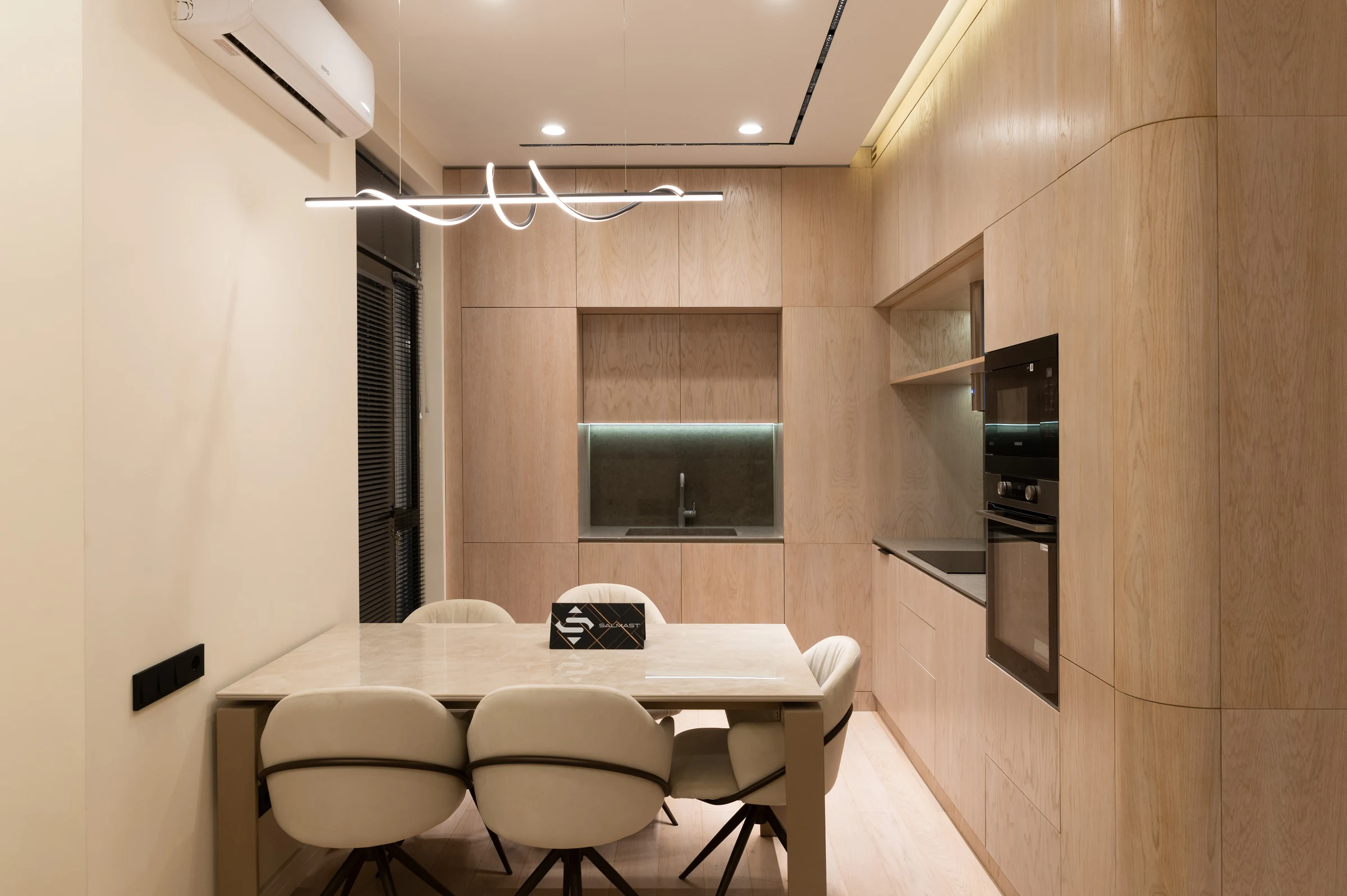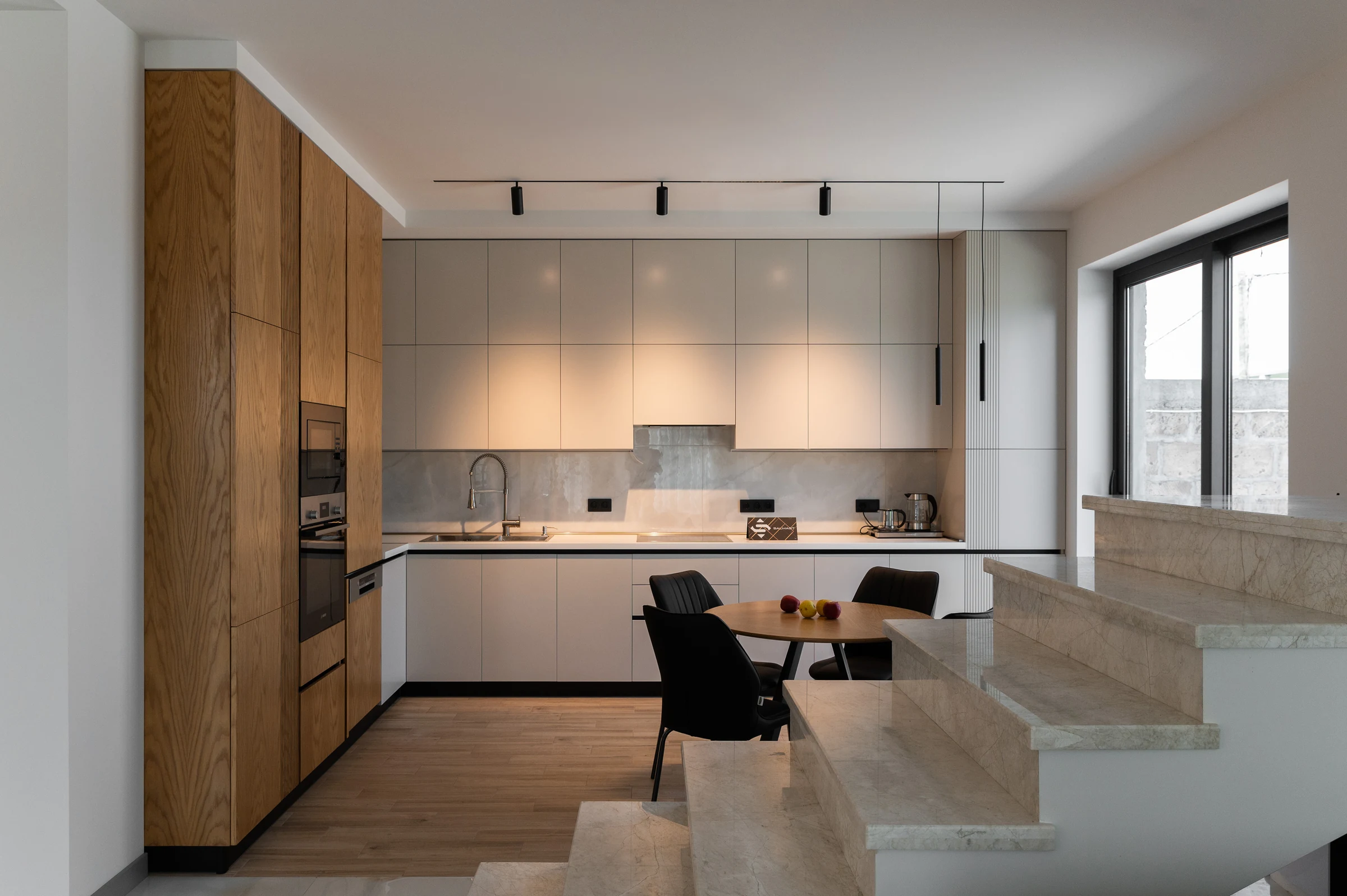

Furniture fronts that fit your way of life
Choose fronts around touch, daily habits and the room itself, not just an attractive colour.
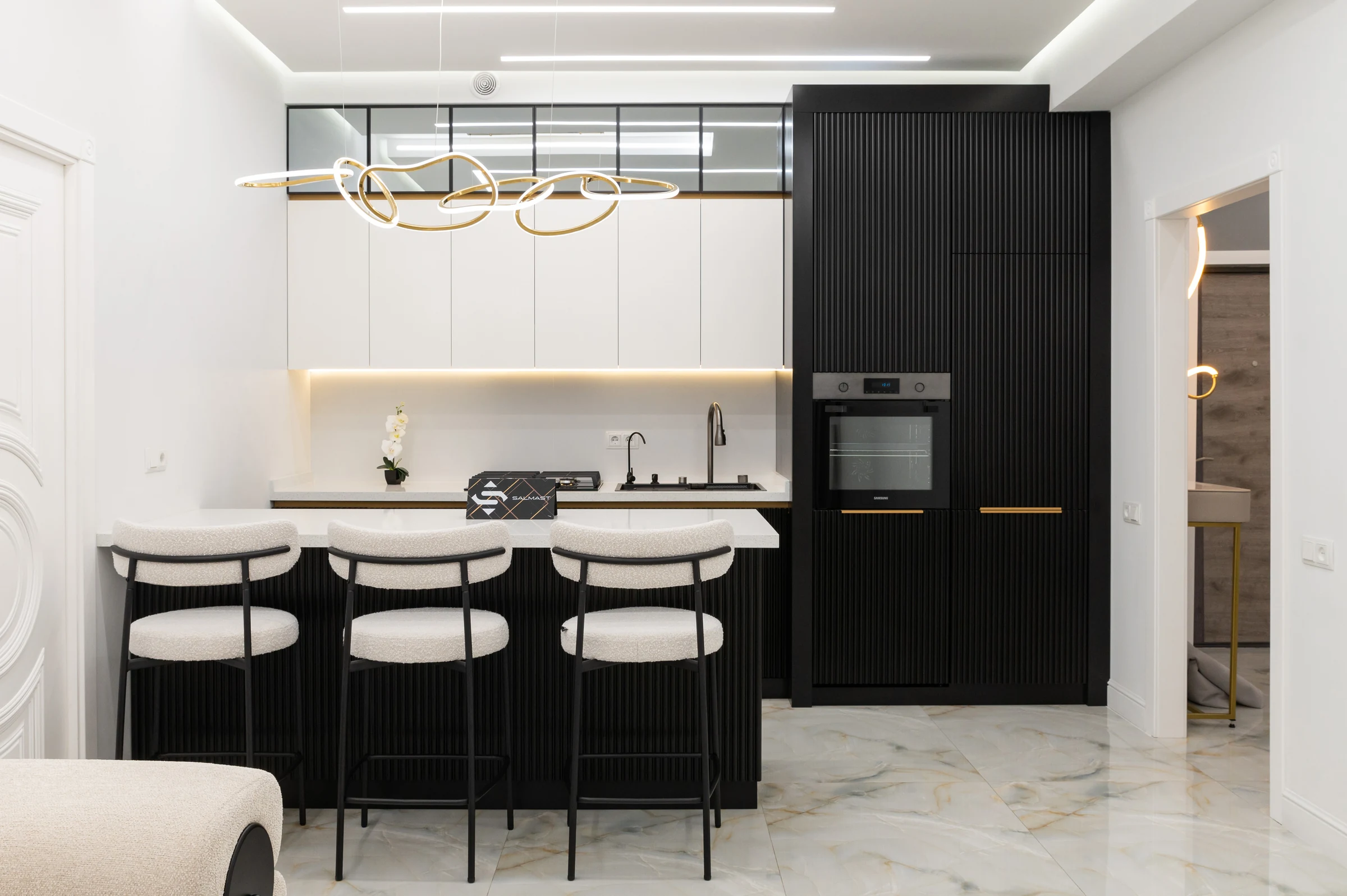
Furniture fronts create a first impression, but you will encounter them beyond a photograph. You will open the doors, see the surface in different light, touch it and look after it. A considered choice brings three things together: the intended appearance, everyday habits and the properties of a particular finish. Think of a front as part of the whole interior, not an isolated colour sample.
Consider colour in the room
First decide whether the furniture should provide a quiet background or become the main feature. Then compare samples with the floor, walls and worktop. The same colour name does not guarantee the same visual effect, and a screen image cannot replace seeing a real surface. What matters is not just each shade, but how the shades sit together.
Look at a sample in the available daylight and artificial light, straight on and at an angle. Notice reflections, texture and how the pattern reads. If possible, compare your chosen materials together in the actual room. Avoid making a final decision from a photograph of a small fragment taken in unknown lighting.
Discuss habits, not vague ideas of practicality
Practical means different things to different people. One person wants to tidy the kitchen quickly after cooking; another values a particular feel; someone else wants an expressive grain. Explain how often the area is used, who opens the cabinets and what kind of care fits into your ordinary routine.
Ask about the properties of the specific material and finish you are considering. An impression of one matt, gloss or wood-effect sample should not be applied to the entire category. Follow the manufacturer's care guidance for the selected surface. A blanket promise that a material can withstand anything is no substitute for clear information about its use.
- What care does the chosen finish require?
- Which limitations on use should be considered?
- Can you see and touch a real sample?
Look at the front and its details together
Material alone does not define the character of furniture. Door proportions, grain direction, open niches, handles and visible edges all play a part. Several similar tones can look coherent or accidental depending on these relationships. Discuss fronts within the overall composition, not only as samples laid out on a table.
Try the proposed opening method and consider whether it feels comfortable. Understanding how you will use a particular door or drawer matters more than simply liking a handle. Review fronts, internal systems and appliances together in the design, so visual choices remain connected to everyday actions.
Record the details before approval
Once the direction is clear, confirm the exact material, finish and colour reference, along with the agreed execution details. A saved photograph labelled roughly this beige remains a reference, not a defined specification. If several surfaces appear in the project, check where each is used and how they meet.
At the SALMAST showroom, you can explore materials and discuss them in the context of your project. The team will help connect appearance with the needs of the room; specific materials and execution are agreed individually. Rather than searching for the best front in general, look for the solution that fits your composition, habits and expectations.